News Archives
The Farm Economy Has Changed Since 2018
The 2018 farm bill was written for a very different farm economy. Since then, farmers and ranchers have navigated a global pandemic, supply chain disruptions, historic inflation and rapidly rising interest rates, resulting in a substantial increase in the cost of producing food, fiber and fuel.
Deputy Ag Secretary Encourages Farmers to Keep Pressure on Fertilizer Industry
Saying farmers have suffered billions of dollars in harm by the fertilizer industry, U.S. Deputy Agriculture Secretary Stephen Vaden told farmers on Friday that the Trump administration is focused on increasing fertilizer supplies, while federal agencies also need farmers' help to bring a case against the fertilizer industry over alleged anticompetitive practices
.png?width=320)
K-State, NASA highlight satellite technology for Kansas farms at Flickner Innovation Farm
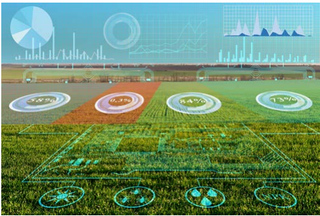
Scientists and officials from NASA stopped by the Flickner Innovation Farm in late August to check in on the progress of a partnership that is helping to shape the future of space-based tools for agriculture.
The event — part of NASA's "Space for Ag" tour — brought together researchers, farmers, extension specialists, policymakers and NASA scientists to explore how satellite data can help producers manage water, improve crop health and plan for long-term sustainability.
Rising fuel surcharges weigh on farmer basis levels
Rising fuel prices are impacting farmers beyond paying more to fill up machinery.
Mike Steenhoek with the Soy Transportation Coalition says the current state of gasoline and diesel costs influence the broad economy.
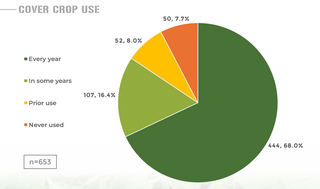
National Cover Crop Survey
CTIC is proud to partner with SARE and ASTA to provide the country's most comprehensive data about cover crop trends and sentiments from farmers and trusted advisers.
DTN Yield Models Trend Slightly Down for Corn, Up for Soybeans
While the month of August brought periods of prolonged, excessive heat to some regions and bouts of torrential, flooding rains to others, the nation's corn and soybean crops maintained their yield trajectories overall, according to updated data from the 2026 DTN Digital Yield Tour.
.png?width=320)
ASA president: China, other key markets continuing to buy US soybeans
The president of the American Soybean Association says growers are optimistic about the future of soybean exports.
Scott Metzger says China coming back into the market is a key reason.
“I think right now they are about 14 million metric tons on their 25 million ton commitment.”

New AEM Whitepaper Explores AI's Growing Role in Agriculture
To help non-road equipment manufacturing stakeholders better understand the growing role of artificial intelligence (AI) in agriculture, AEM has released a new whitepaper -- AI in Agriculture Equipment: Supporting Productivity, Efficiency, and Decision-Making Through Technology.
Production, Price, and Profit Prospects for the 2027 Wheat Crop
Producers that grew winter wheat in 2026 were most likely glad to put the season behind them. Winter wheat acres planted in the U.S. were the lowest since 2020. With only 67 percent harvested (tied with 2023 as the lowest on record), wheat acres harvested were the lowest since the USDA began reporting in 1909.
6 of 8 Fertilizer Prices Lower, Led by UAN28
Retail fertilizer prices for the last day of August and first four days of September 2026 show more less expensive fertilizer prices compared to last month.
Six fertilizers were lower looking back to last month while the remaining two were slightly higher, marking the second week in row we saw this. DTN designates a significant move as anything 5% or more.
.png?width=320)
New Study: Ethanol Holding Down Gasoline Prices During Iran Conflict
Blending ethanol into the nation’s fuel supply has helped to substantially lower gasoline prices during the ongoing Iran conflict, a new study for the Renewable Fuels Association shows. Prepared by George Hoekstra, a 35-year veteran of the petroleum refining industry, the study concludes that the average E10 cost savings advantage has been 38 cents per gallon since the Iran conflict began.

Farm practices take center stage in updated 45Z Clean Fuel guidance
Ag and biofuel groups are welcoming further guidance on the 45Z Clean Fuel Production Tax Credit.
Growth Energy senior vice president of regulatory affairs Chris Bliley says the update is exciting for biofuel producers and for farmers.

USDA Crop Progress: Corn 5% Harvested, Rated 56% Good to Excellent as of Sept. 6
The U.S. corn harvest kicked off slightly ahead of last year's pace and ahead of the five-year average, according to USDA NASS's weekly Crop Progress report released on Tuesday.
.png?width=320)
Country of origin labeling debate intensifies as Trump orders review of beef labeling rules
The cattle industry is divided over the role and future of mandatory country of origin labeling.
Bill Bullard, CEO of R-CALF USA says the National MCOOL Coalition’s recently launched “Label Our Beef” petition is proof that there is nationwide momentum behind the movement. “There’s been about 7,000 signers in just 72 hours, and that’s pretty impressive,” he says.
.jpeg?width=320)
Knowns and Unknowns on the Presidential Beef Proclamation
Foreign beef importers gain while ranchers lose immediately. Waiving the 26.4% tariff on 300,000 MT of beef delivers foreign sellers an estimated $650 million reduction in tariffs for foreign-sourced beef trimmings, just as ranchers sell calves at prices $300 to $400 per head below levels from two months earlier.
.webp?width=320)
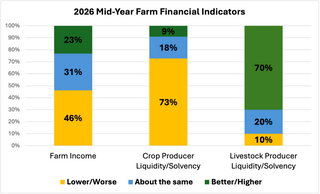
2026 Mid-Year Farm Financial Condition Update
Entering the second half of 2026, a new farm financial snapshot points to the continued financial challenges facing Southern agriculture, particularly among crop producers. The findings are based on a semi-annual survey conducted by the Mississippi State University Extension. Survey respondents included producers, professional farm managers, land appraisers, commercial bankers, Farm Credit System lenders, and USDA Farm Service Agency personnel operating in Mississippi, Arkansas, Louisiana, Tennessee, and neighboring states.
US-China Summit Could Shape Soybean Sales, Drone Tariffs for American Farmers
Chinese President Xi Jinping is expected to visit the U.S. on Sept. 24 for a one-day summit over war sanctions and artificial intelligence, but the Chinese government said recently it must "overcome obstacles" before a meeting is finalized.
The summit is expected to focus heavily on tensions surrounding the war in Iran and regulation of high-dollar technology. But for agriculture, the meeting could offer another test of China's commitments to buy U.S. soybeans and an opportunity to discuss new restrictions and tariffs on drones.
.jpg?width=320)
Trump moves to expand beef processing options, competition
President Trump has signed a pair of executive orders that address market access and competition for America’s farmers and ranchers.
During a signing ceremony on Friday, the President said the goal is to improve the financial viability of producers. “The livestock industry has been ripped off by a meat-packing monopoly, which we are probably taking care of pretty well today, driving down what ranchers earn. They were charging them numbers that were unsustainable.”
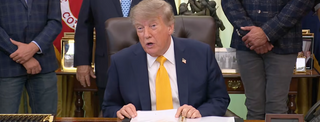
Agri-Pulse Newsmakers: Rollins makes announcement at Farm Progress Show in Iowa
This week's Agri-Pulse Newsmakers is on location in Boone, Iowa, at the Farm Progress Show. Agriculture Secretary Brooke Rollins announces the Data Modernization Plan and responds to the president's decision to temporarily allow foreign ground beef into the US duty free. We also hear from Laurie Isley of the United Soybean Board on sustainability and opportunities for soybean growers, and ADM’s Paul Scheetz on regenerative agriculture and creating value for farmers.

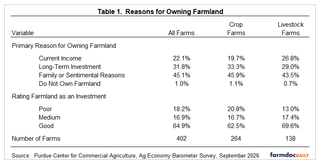
Why U.S Farmers Own Farmland and What They Expect for Land Values
Farm operators own farmland for many reasons, including current income, long-term investment, and family or sentimental reasons. Using results from the August 2026 Purdue University-CME Group Ag Economy Barometer (AEB) survey, which included responses from approximately 400 U.S. farmers, this article examines reasons for owning farmland, factors influencing farmland values, and how producers perceive farmland as an investment.
New WOTUS Rule Provides Certainty for Farmers
American Farm Bureau Federation President Zippy Duvall commented today on the Environmental Protection Agency’s (EPA) and U.S. Army Corps of Engineers’ (Army Corps) proposed Waters of the U.S. (WOTUS) rule

Top Agriculture Republican Seeks Waiver for Another Term as Chairman
House Agriculture Chairman Rep. Glenn "GT" Thompson, R-Pa., has requested a waiver to serve an additional term as chairman of the committee after completing his six-year term limit.
.jpg?width=320)
Productive but Priced Out: Why Input Prices Matter for U.S. Corn Competitiveness
U.S. corn growers are the most productive and efficient in the world. On average, they produce roughly twice as much corn per acre as their counterparts in Brazil, while using fewer inputs. Productivity reflects how much corn is produced. Efficiency reflects how effectively inputs are converted into output. Both are the result of decades of investment in genetics, agronomy, soil health, and farmer expertise.
.jpg?width=320)
U.S.-Canada trade tensions complicate USMCA talks
An ag lobbyist says a trade standoff between the U.S. and Canada is complicating efforts to update the U.S.-Mexico-Canada Agreement.
Randy Russell with The Russell Group says he’s concerned.
“The relations between our government and the Mexican government are far better. With Canada, we have some real challenges.”

U.S.-Canada trade tensions raise potash concerns for Minnesota farmer
A central Minnesota farmer says escalating U.S.-Canada trade tensions are adding uncertainty to the potash market.
“We’re hearing potash won’t be one of the things affected,” Cordell Huebsch tells Brownfield. But he’s still on alert.
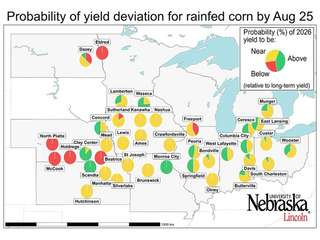
UNL Corn Belt Yield Model Update Shows Benefits of Recent Corn Belt Rainfall
The latest production of the University of Nebraska-Lincoln Hybrid-Maize crop model shows mostly favorable prospects for non-irrigated (rainfed) corn in the Corn Belt.
The Hybrid-Maize crop model simulates corn yields at 43 locations and analyzes yield prospects for both rainfed and irrigated corn production. Faculty and Extension educators from 10 universities cooperate in the model updates.
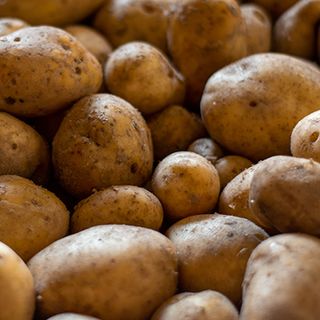
U.S. Potato Export Value Reaches $2.17 Billion in July 2025-June 2026 Marketing Year
U.S. exports of potato products totaled 2.99 million metric tons (fresh weight equivalent) valued at $2.17 billion during the July 2025 through June 2026 marketing year, according to trade data from the U.S. Department of Commerce. Export volume declined 4.8% from the previous year, while export value decreased 6.3%.
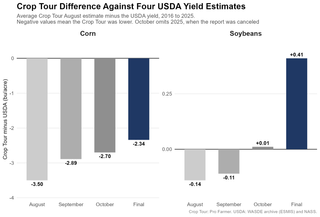
Does a Big Pro Farmer Crop Tour Gap Mean a Big WASDE Yield Change?
Recent bullishness in corn and soybean futures has been driven by a tightening balance sheet in both crops. Demand has expanded, and weather in key growing areas has trimmed supply. That weather is now showing up in the USDA crop condition ratings (USDA-NASS, 2026), and the Pro Farmer Crop Tour came in well below USDA on corn (Pro Farmer, 2026), which has set off a good deal of online debate about yield estimation.