
News Archives
Economists Debate Diesel Export Ban While USDA Questions Ad-Hoc Relief
Agricultural economists at an outlook forum on Tuesday cautioned against banning diesel exports, while USDA's chief economist also suggested farmers aren't clamoring for additional ad-hoc payments being considered by Congress.

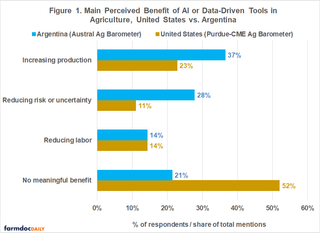
Farmer Perceptions of AI Benefits in the United States and Argentina
Artificial intelligence and data-driven tools are being applied to agriculture, from robotics, automation, and precision farming to predictive analytics and digital advisory tools (Aijaz et al., 2025; Edet and Chowdhury, 2026). These technologies are often presented as ways to improve productivity, reduce labor needs, manage risk, and support farm decision-making. But do farmers themselves see those benefits? Recent surveys in the United States and Argentina suggest different answers. Both asked farmers a similar question: Thinking about artificial intelligence (AI) or other data-driven tools, what do you see as the main benefit for your operation? The comparison offers a direct look at how producers in two major agricultural economies perceive the value of these emerging technologies.
Minnesota sees early surge in HPAI cases
Minnesota is seeing an early onset of highly pathogenic avian influenza cases heading into the heart of fall migration.
Minnesota Turkey Growers Association executive director Ashley Kohls says a resurgence of the disease is not surprising.
“But what is happening that’s unexpected is how early it surfaced this fall. We saw our first case of the fall in mid August, and have kind of seen a little bit of a blip again now here in the last week.”

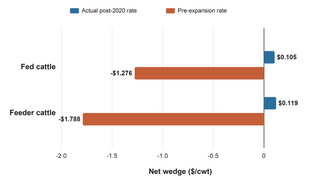
How Higher LRP Subsidies Changed the Cost Comparison with CME Put Options
Livestock Risk Protection (LRP) and Chicago Mercantile Exchange (CME) put options both protect cattle producers against lower prices while preserving the opportunity to benefit if prices rise. These risk management tools are not identical, but they function similarly, and their premiums can be compared to assess the cost of establishing a price floor. Understanding how these products compare in terms of cost is especially important in the current market environment, as record-high cattle prices and heightened market volatility have made price protection increasingly expensive.
Prices Up but Pressure Remains: Corn and Soybean Growers Still Navigating Tight Margins
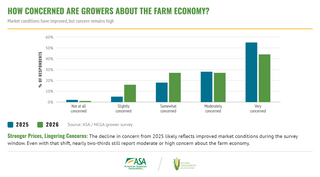
A new report co-authored by the National Corn Growers Association and American Soybean Association documents ongoing economic pressures across farm country, despite recent price improvements in both commodity markets. The report analyzes and summarizes the results of a survey conducted by Farm Journal of 1,200 corn and soybean farmers across the country.
CRES brings a rural perspective to the national energy debate
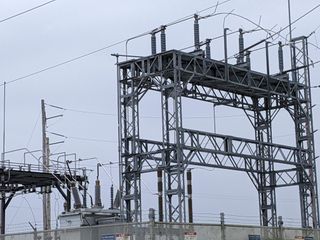
For decades, rural communities have been central to American energy production, but their interests have not always been well represented when energy decisions are made. Wind turbines and transmission lines cross farmland, power plants are built in rural counties, and the costs of the nation’s energy transition can fall disproportionately on people and communities that may not directly benefit from the infrastructure being built. A new research center at the University of Missouri aims to bring greater attention to those impacts.
USDA Ends Checkoff Funding for Climate, Carbon and ESG Initiatives
U.S. Agriculture Secretary Brooke Rollins is directing the National Dairy Promotion and Research Board to end dairy checkoff funding for projects advancing environmental, social and governance (ESG), net-zero and climate-neutrality initiatives, while ordering a review of all other checkoff programs for alignment with the policy.
.jpg?width=320)
Railroad merger raises questions about rates and competition
Some ag groups say there’re still plenty of unanswered questions about a potential railroad merger between Union Pacific and Norfolk Southern.
Michael Dibbern is president of the Nebraska Corn Growers Association. “The jury is still out. There’re some benefits that they talk about on time and efficiencies, and that’s great. We want to stay more competitive as Brazil and other countries become more competitive against us production wise.”

Research Advances Could Improve rHVT Vaccine Production, Efficiency and Dose Uniformity
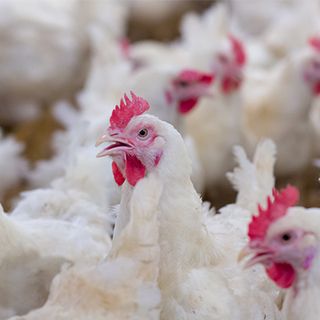
A recent study funded by USPOULTRY and the USPOULTRY Foundation has identified a promising approach to improve the production and delivery of recombinant herpesvirus of turkey (rHVT) vaccines, which are widely used to protect poultry against important diseases. The research is part of the Association’s comprehensive research program, which encompasses all phases of poultry and egg production and processing.
Startup agricultural drone companies are looking for ways to increase domestic production of drones to avoid new tariffs and bans on imported drones, but there are gaps in the supply chain that make it difficult to ensure their equipment includes only U.S.-made parts.
Startup agricultural drone companies are looking for ways to increase domestic production of drones to avoid new tariffs and bans on imported drones, but there are gaps in the supply chain that make it difficult to ensure their equipment includes only U.S.-made parts
.jpg?width=320)
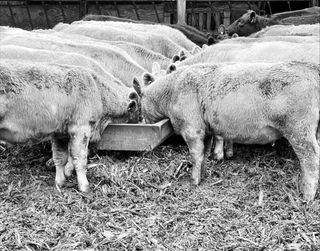
August placements, marketings lowest on record
Cattle placed into feedyards in August were down 9 percent from last year. Mississippi State University Extension ag economist Josh Maples says, “This is the lowest for any August placements number that we’ve got on record.”
He says placements have been below year-ago levels for the 10 of the past 12 months.
Agri-Pulse Newsmakers: Farm bill finally advances — what it means for farmers and ranchers
This week on Agri-Pulse Newsmakers, Colorado Senator Michael Bennet, a member of the Senate Agriculture Committee, discusses the latest committee action. We also talk with Brian Glenn, director of governmental affairs for the American Farm Bureau Federation, about what comes next for the farm bill.

Under Pressure: The Size and Timing of the Harvest Low in Corn Basis
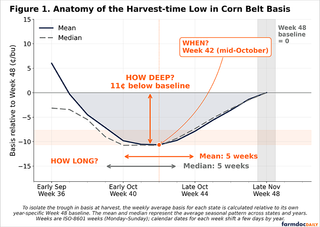
As combines roll across the US Corn Belt, commodity market analysis often attributes any observed decrease in crop prices to the phenomenon of ‘harvest pressure’. Abundant supply at harvest means farmers are willing sellers and grain buyers less aggressive bidders in the market for immediate delivery. Basis, the price difference between the local spot and nearby futures prices, weakens as new-crop corn fills bins and country elevators, then recovers as harvest pressure eases.
Mandatory Country of Origin Labeling, MCOOL, Clears Key Senate Farm Bill Hurdle
Mandatory Country of Origin Labeling (MCOOL) gained ground this week as the Senate Agriculture Committee advanced its version of the Farm Bill.
Senate Majority Leader John Thune (R-S.D.) led the charge to reinstate MCOOL for beef, which is tied to the American Beef Labeling Act.
.jpg?width=320)
Latest Fed rate hike could increase borrowing costs for farmers ahead of harvest
An ag economist says the latest increase in interest rates could put added financial pressure on farmers ahead of harvest.
David Widmar with Agricultural Economic Insights says many producers are already struggling to stay afloat.

USDA Ends Mandatory Farmer Funding of ESG Commitments in Dairy Checkoff
Today, U.S. Secretary of Agriculture Brooke L. Rollins reaffirmed the Administration’s commitment to American farmers, announcing the U.S. Department of Agriculture’s (USDA) decisive action to end dairy checkoff funding for Environmental, Social, and Governance (ESG) overregulation.
USDA NASS Modernizes Data Visualization with Launch of AgInsights
The USDA’s National Agricultural Statistics Service (NASS) launched AgInsights, a new data dissemination tool that will serve as a key component of NASS’s ongoing modernization strategy.

Farm Bill Clears Senate Committee After Procedural Dispute
The Senate Agriculture Committee advanced the 2026 farm bill on a 12-11 party-line vote Wednesday after resuming a recessed business meeting and rejecting an effort to reopen the bill for another amendment.
The bill advanced after Sen. Mitch McConnell, R-Ky., returned to the committee following an extended absence.
.jpg?width=320)
Senate farm bill heads to floor as lawmakers debate SNAP, Prop 12
The Senate Ag Committee advanced a farm bill out of the committee on a party line vote Wednesday, but not without an attempt from lawmakers to amend the bill.
Senator Joni Ernst from Iowa tried to add Prop 12 language, but the attempt was denied by Chairman John Boozman from Arkansas, who said the time to make amendments in committee has passed.

USDA Announces New American Biofuels Trade Outlook at Growth Energy Biofuels Summit
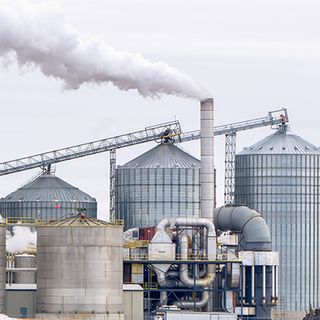
U.S. Department of Agriculture (USDA) Secretary Brooke Rollins announced the launch of USDA’s American Biofuels Trade Outlook while delivering remarks as a featured speaker at Growth Energy’s annual Biofuels Summit (GEBS) on Tuesday.

ACE Thanks CARB for Recognizing Ethanol’s Role in Reducing Emissions in California
The American Coalition for Ethanol (ACE) submitted comments on the California Air Resources Board (CARB) proposed amendments to the California Reformulated Gasoline Regulations (CaRFG). The proposal would establish a fuel specification for E15 gasoline within the CaRFG and clarify the standards under which fuel suppliers may continue to offer both E10 and E15 fuel blends in California.
Senate To Vote on Farm Bill Wednesday, McConnell Back
Farmers are flooding Capitol Hill this week ahead of Wednesday's Senate Agriculture Committee vote on the farm bill, nearly six weeks after Democrats blocked the legislation over provisions that would shift some SNAP costs to states.
.jpg?width=320)
Wertish: lawmakers still considering $12 billion in farm relief
Lawmakers are indicating another round of Farm Bridge Assistance payments remain in the works.
Minnesota Farmers Union president Gary Wertish is in Washington D.C. this week for the annual Farmers Union fly-in and tells Brownfield members of Congress are eyeing $12 billion in economic relief for farmers.

Hormuz Price Shocks Outpace Higher Crop Prices
Post-Hormuz input cost shocks for diesel and fertilizer are eating into any revenue gains. Since the Strait of Hormuz closure in early March, fertilizer and diesel costs have surged nationally. Diesel prices alone are up 45% since the spring and, absent a resolution of geopolitical risks, including recent disruptions in the Bab al-Mandeb Strait, input costs are expected to keep climbing as farmers enter into harvest.
2025 U.S. Ethanol Exports Reach Second Consecutive Record High
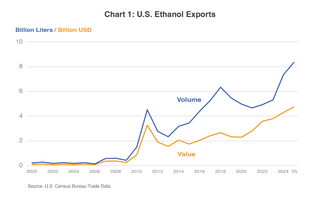
During the past 2 years, U.S. ethanol exports reached new volume and value records, fueled by growing global ethanol import demand and reduced competition from Brazil, the world’s second-largest ethanol exporter. Top ethanol-importing markets like Canada, the European Union (EU), the United Kingdom (UK), India, Colombia, and the Philippines increased ethanol consumption and drove global import demand higher.
Changing Public Perceptions of AI and Data Center Development: Results from the Gardner Food and Agricultural Policy Survey
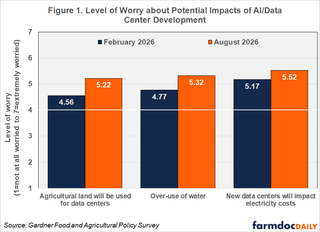
The social, economic, and environmental impacts of data centers and artificial intelligence (AI) are increasingly important issues facing communities across the country. Although most existing data centers are in urban areas, about two-thirds of new planned facilities are slated for rural communities, where larger sites can accommodate their growing need for developable land (Melotte, 2026). However, many rural communities have no experience hosting this emerging infrastructure (Seets and Radde, 2026). The pace of these developments, the increased media attention, and public opinion has begun to affect how states and communities respond.
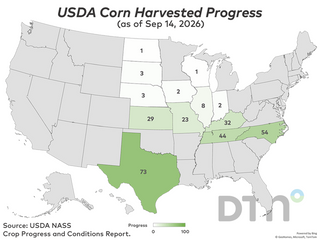
USDA Crop Progress: Corn 8% Harvested, Rated 57% Good to Excellent as of Sept. 13
The U.S. soybean harvest kicked off ahead of both last year's and the five-year-average pace, while the nation's corn harvest also continued slightly ahead of normal, according to USDA NASS's weekly Crop Progress report released on Monday.
Tight global sulfur supplies continue to drive fertilizer prices
The vice president of government and public affairs with The Mosaic Company says continued constraints on global sulfur supplies are dramatically impacting the company’s ability to produce phosphate fertilizer.
Sarah Fedorchuk says the conflicts in Ukraine and Iran, as well as export controls from major sulfur producers like Russia, China, and India, have reduced available supplies.