
News Archives
USDEC, NMPF Thank Administration for Maintaining Pressure on Canada to Resolve USMCA Dairy Concerns
The National Milk Producers Federation (NMPF) and U.S. Dairy Export Council (USDEC) expressed their strong appreciation to the Trump Administration for its continued focus on using all available trade tools to resolve outstanding U.S.-Mexico-Canada Agreement (USMCA) dairy market access issues with Canada. With a 50 percent tariff on certain Canadian imports taking effect on Saturday, the organizations urged Canada to return to the negotiating table and prevent further escalation.
US Tariffs on Canada Take Effect; Retaliatory Duties Expected
A week of United States-Canada trade negotiations ended without a deal Friday, sending 50% tariffs on Canadian goods into effect Saturday and prompting Canada to prepare retaliatory measures.
During line-by-line negotiations in Washington, last-minute changes reported by both sides made an agreement unattainable.
.png?width=320)
Rollins: Additional beef imports needed to ease consumer costs
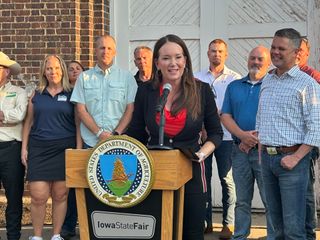
U.S. Ag Secretary Brooke Rollins says she supports President Trump’s proposal to temporarily ease restrictions on imported beef.
“I think you’ll be hard pressed to find a president that has been more supportive of agriculture and farmers and ranchers than President Trump,” she said Friday night at the Iowa State Fair in Des Moines.
Agri-Pulse Newsmakers: AFBF's Zippy Duvall on the farm economy and Meryl Kennedy Farr on rice costs, prices and trade
This week on Agri-Pulse Newsmakers, American Farm Bureau Federation President Zippy Duvall discusses the worsening farm economy, congressional assistance, the farm bill and agricultural labor reform. Louisiana farmer and businesswoman Meryl Kennedy Farr of Kennedy Rice Mill and 4Sisters Rice shares how high costs, low commodity prices and trade uncertainty are affecting rice producers — and why women will be critical to agriculture’s future.

Economist says reopening Mexico cattle imports could support future beef production growth
Live cattle imports from Mexico are set to resume Monday.
David Anderson, an ag economist with Texas A&M University tells Brownfield, “The word if is really important. Will we actually open? Will they stay open? “
.jpg?width=320)
Trump Proposes Lifting Tariff Rate Quota on 300,000 Metric Tons of Beef Imports
President Donald Trump announced on Truth Social Friday morning that the United States will allow up to 300,000 metric tons of foreign beef intended for ground beef to be imported without an out-of-quota tariff.
.jpg?width=320)
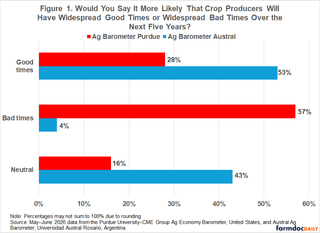
How Farmer Sentiment Compares in the United States and Argentina
Despite facing similar pressures on farm finances, such as high input costs and low commodity prices, farmers in the United States and Argentina see the years ahead quite differently. This is one of the key findings from the first direct comparison of two established producer sentiment surveys: the Purdue University–CME Group Ag Economy Barometer in the United States and the Austral Ag Barometer in Argentina.
Growth Energy: EPA Waiver Secures E15 Sales for the Rest of Summer, Illustrates Need for Year-Round Fix
Growth Energy, the nation’s largest biofuel trade association, commended the U.S. Environmental Protection Agency (EPA) and the U.S. Department of Energy (DOE) for issuing a temporary emergency fuel waiver that clears the way for the continued sale of E15, a fuel blend made with 15% ethanol that costs less than standard fuel and is approved for use in 96% of cars on the road today.

Blockchain Beyond Bitcoin: Understanding Digital Assets in Agriculture
Blockchain is best known as the technology underlying cryptocurrency networks like Bitcoin but can be used in a variety of other applications such as tracking products through a supply chain, automatically carrying out agreements, and digitally representing ownership of physical assets. These uses are creating new opportunities in agricultural, finance and environmental markets while raising questions about regulation, financial risk and data control.

Lindberg: Mexico talks advancing, Canada remains a challenge
The USDA’s Under Secretary for Trade and Foreign Agricultural Affairs says the USMCA review process has had both successes and challenges.
Luke Lindberg tells Brownfield significant progress has been made in negotiations with Mexico.
5 Fertilizer Prices Slightly Lower Than Last Month; 3 Higher
Retail fertilizer prices continue to be somewhat mixed for the second full week of August 2026, according to retailers tracked by DTN.
For the fourth week in a row, five fertilizers were lower in price compared to last month while the remaining three were slightly higher.
.png?width=320)
Women in Agribusiness Names 2026 Demeter Award of Excellence Recipients
Women in Agribusiness (WIA) announced the 2026 recipients of the WIA Demeter Award of Excellence, the organization's highest honor recognizing women who have demonstrated exceptional performance and made an outstanding contribution to agribusiness.

American Farmland Trust Develops a Batch and Grow Roadmap to Streamline Cover Crop Adoption
American Farmland Trust (AFT) recently published the Batch and Grow Roadmap, a step-by-step guide to help streamline cover crop adoption and scale the Batch and Grow model across the Midwest.
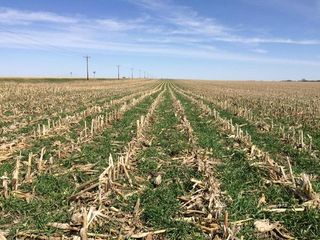
World Off-Track on Nearly Every Food System Goal, Latest Assessment Reveals
The latest study from the Food Systems Countdown Initiative (FSCI) reveals the stark reality of where global food systems transformation stands: For most indicators on health, environment, livelihoods, governance and resilience, a vast majority of countries will not meet the internationally agreed 2030 goals. And for some indicators such as greenhouse gas emissions from food systems, no country in the world is projected to meet the target.
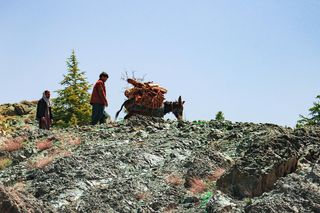
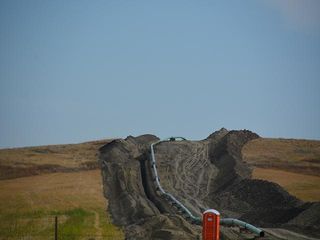
In Pausing Canadian Tariffs, Trump Rekindles Possibility of Keystone XL Pipeline
President Donald Trump late Tuesday paused 50% tariffs on $20 billion in Canadian products, including cheese, and rekindled the possibility of another U.S.-Canada oil pipeline, the Keystone XL.
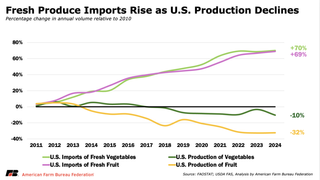
Farm Bureau calls for lower regulatory costs, reforms to strengthen produce sector
The American Farm Bureau says the 70 percent increase in fresh fruit and vegetable imports since 2010 is a direct reflection of challenges across the specialty crop sector.
Danny Munch tells Brownfield, “There’s sort of a regulatory-imposed cost differential that makes growing in one part of the world much harder than other parts of the world, even though those same grocery products are competing right next to each other for the consumer.”
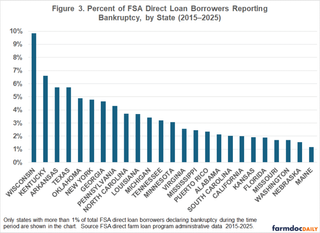
Which FSA Farm Loan Borrowers Filed Bankruptcy between 2015-2025?
U.S. farm bankruptcy filings rose in both 2024 and 2025, reversing a trend that had been improving since a peak in 2019. Prior years of falling crop prices, higher interest rates and input costs, rising land prices and rental rates, and stress specific to certain crops and livestock sectors have all contributed to the recent increase in bankruptcy filings. These impacts have been slightly tempered by government efforts to stabilize farm income as well as FSA loan policy.
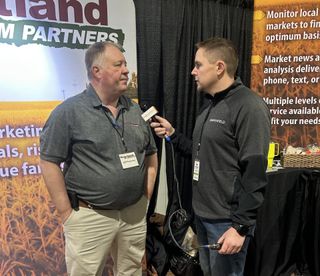
Brazil crop concerns could provide support for U.S. Corn
A market analyst says weather challenges in South America could push commodity prices higher for U.S. farmers this fall.
Jeff Peterson with Heartland Farm Partners says some parts are facing abnormally wet conditions.
Drought Pushes Plains, Southwest Pasture Conditions Far Below Year-Ago Levels
Drought is hammering pastures and rangeland across the Plains and Southwest, pushing conditions significantly below where they stood a year ago.
The states with the highest percentage of pasture and range in the very-poor-to-poor category are in those two regions, according to USDA's weekly Crop Progress report released on Monday.
.png?width=320)
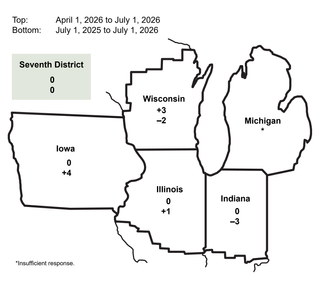
Second Quarter Midwest Farmland Values Unchanged
Farmland values for the Seventh Federal Reserve District were flat in the second quarter of 2026 from a year earlier, their slowest year-over-year growth since the fourth quarter of 2024. Values for “good” agricultural land also showed no change in the second quarter of 2026 relative to the first quarter, according to survey responses from 79 District agricultural lenders.
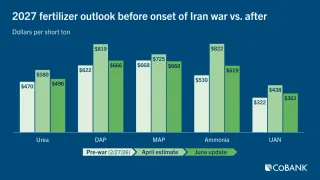
Why higher fertilizer prices are here to stay
Fertilizer prices are expected to remain above pre-Iran war levels through 2028, creating sustained pressure on farmers and agricultural retailers as global conflicts and supply chain disruptions continue to reshape the nutrient market. Although prices have retreated from the historic highs seen at the start of the war, elevated fertilizer expenses remain a major headwind for the U.S. agricultural sector.
Tyson plant closures raise concerns over cattle market competition
The cattle industry continues to digest the news that Tyson has shuttered additional beef processing plants.
Illinois Beef Association Executive Vice President Josh St. Peters says the abrupt closure of Tyson’s Joslin, Illinois facility is problematic.
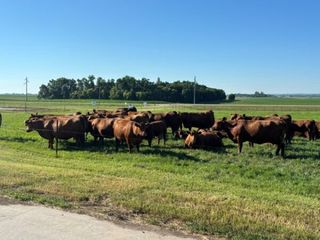
Top 5 Things to Watch: El Nino Data; Cattle on Feed Report; Weather Systems for Week Ahead
Here are the Top 5 things the DTN Newsroom is tracking for the week of Aug. 16.

Agri-Pulse Newsmakers: The future of ag from Penn State Ag Progress Days
This week, join host Tammi Arender for Agri-Pulse Newsmakers on location at Penn State’s Ag Progress Days. We sit down one-on-one with House Agriculture Committee Chairman GT Thompson to discuss the issues shaping U.S. agriculture. Pennsylvania Agriculture Secretary Russell Redding and Penn State College of Agricultural Sciences Dean Dr. Troy Ott also join us to talk about innovation, technology and what’s ahead for farmers and the future of agriculture.

Trump administration pushes agriculture deregulation to support farmers and rural growth
Members of the Trump administration say work continues to reduce regulatory uncertainty in agriculture.
SBA Administrator Kelly Loeffler tells Brownfield excessive federal regulations are creating challenges for the ag industry.

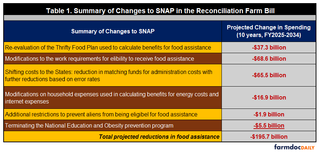
The Unfinished Farm Bill Remains Unfinished and Sends a Warning
The Senate Agriculture, Nutrition, and Forestry Committee appears to have driven another nail in the coffin of the Farm Bill. It remains to be seen if it was the final one.
Tyson Foods Announces Network Restructuring for Beef Business to Strengthen Long-Term Performance
Tyson Foods is making strategic changes to its beef operations to position the company for long-term success. Tyson Foods will anchor its beef business around three strategically located beef facilities in the central United States: Dakota City, Nebraska; Holcomb, Kansas and Amarillo, Texas, to create a more competitive footprint amidst one of the most historic cattle shortages the country has ever experienced.
USDA Staffing Shortages Strain FSA and NRCS Services Across Rural America
Farmers in Polk County, Iowa, still have a Farm Service Agency office to visit. But when they arrive, four out of five days, that office will be closed.
Calls are rerouted and employees from other counties come in to staff the office.
.jpg?width=320)